



 Acorn AI: Game Testing Agent
Game Testing Redefined by Scalable Computing – No-Code Automation, 300% Efficiency Gains
Acorn AI: Game Testing Agent
Game Testing Redefined by Scalable Computing – No-Code Automation, 300% Efficiency Gains
Learn More
Pricing
Source: TesterHome Community
2. China’s Tech Giants: Most Aggressive QA Downsizing, Leading Global Transformation
3. U.S. Tech Companies: Not Eliminating QA, But Engineering-First Upgrades
4. Gaming Industry: The Hottest Arena for QA Automation and AI Adoption
5. Japan: Gradual Transformation Amid Cautious Industry Norms
6. Global Industry Surveys: QA Is Evolving, Not Disappearing
7. The Real Risk: Not QA Jobs, But Manual-Only QA Professionals
Over the past two decades, driven by the rapid growth of the internet and mobile internet, software testing (QA) has always been an indispensable core function in the IT industry—critical to ensuring stable software operation, safeguarding user experience, and mitigating online failures. During the industry’s high-growth phase, a large number of junior testing roles emerged as a standard fixture in technical teams.
However, with the full-scale adoption of generative AI and large language models (LLMs), the entire software development lifecycle has been completely upended. A pervasive question now ripples across the industry: Are major tech companies phasing out traditional software testing roles entirely?
A review of hiring adjustments, organizational restructurings, and technological shifts at global leading tech firms over the past five years yields a clear answer: Low-end, execution-focused traditional testing roles are rapidly declining and disappearing, while Quality Engineering (QE) roles—requiring engineering expertise, AI proficiency, and quality architecture capabilities—are rising in strategic value and industry importance.
This is not merely a matter of layoffs or job elimination; it is a fundamental structural overhaul and comprehensive upgrade of the software quality industry, an industrial evolution tailored to the AI-powered development era.
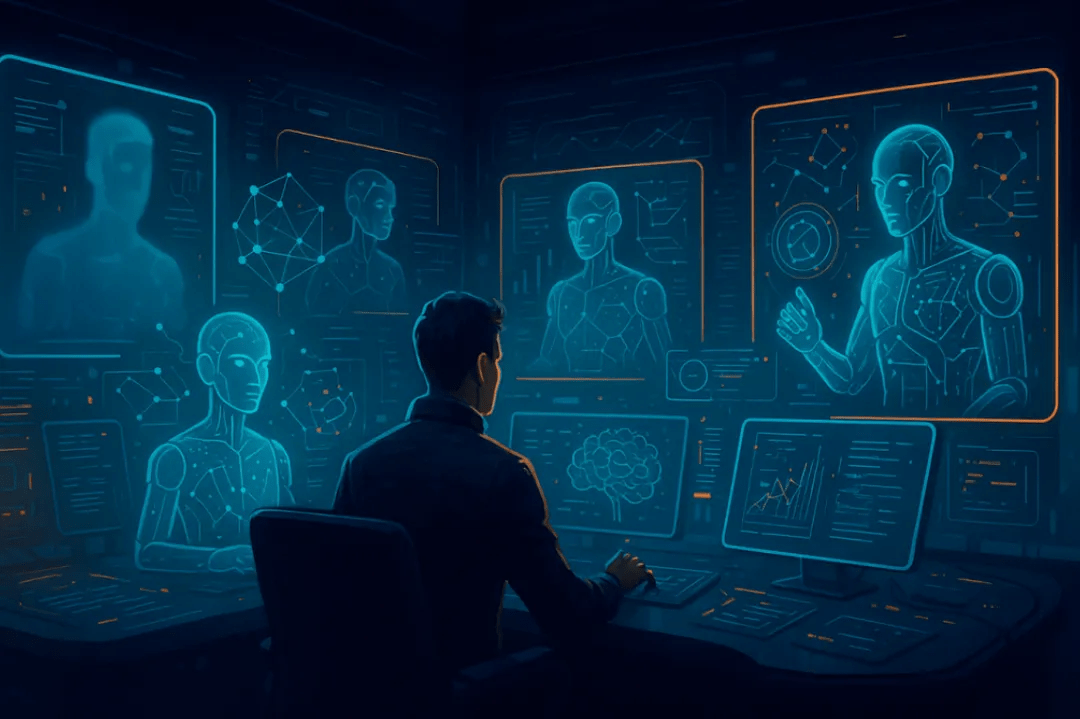
In the Web era, the early mobile internet phase, and the booming outsourcing industry, QA roles had a narrow, singular focus centered on post-development quality validation, with highly repetitive, standardized workflows. For most enterprises back then, QA teams’ daily work revolved around basic execution tasks.
Core responsibilities of traditional QA included: manually clicking through product features for end-to-end testing, strictly executing predefined test cases, performing regression testing after version iterations, identifying and logging defects in testing and production environments, and conducting final acceptance checks before product launches.
This labor-intensive testing model aligned with an era of slow software iteration, long release cycles, and simple product architectures—gaining widespread adoption across traditional internet, early mobile internet, and software outsourcing sectors.
But in the new era of AI-empowered development, software iteration speeds have accelerated exponentially, product architectures have grown increasingly complex, and release frequencies have surged. The flaws of manual testing have been magnified tenfold. Today, global tech giants share a unified consensus: Pure manual, execution-only testing is inefficient, costly, and completely incompatible with the fast-paced, continuous delivery cycles of AI-era development.
As a result, the core positioning and workflows of QA are undergoing a radical transformation, moving beyond isolated manual validation to embrace a diversified, technically advanced new direction. Key dimensions of this shift include engineering, platformization, AI integration, automation, and DevOps alignment—marking a leap from "post-hoc bug detection" to "end-to-end quality governance."
China’s internet industry is defined by rapid iteration, innovation, and change. In the ongoing QA restructuring, domestic leading tech firms have outpaced global peers in the scale of their adjustments and speed of transformation. Over the past three years, giants like Tencent, Alibaba, ByteDance, and Baidu have completed structural overhauls of their QA teams, with three clear, irreversible industry trends emerging.
Domestic tech giants have largely phased out low-end manual testing roles, replacing repetitive, low-skill QA work entirely with automation. Tasks such as pure functional testing, UI regression checks, documentation compliance validation, and repetitive test case execution have been fully automated via in-house testing platforms and AI-powered tools.
These foundational tasks are now handled by enterprise-grade automated testing platforms and AI testing tools, supplemented by developer self-testing protocols. This eliminates manual testing’s inefficiencies, errors, and coverage gaps—directly driving a sharp decline in demand for junior manual QA roles.
To align with continuous integration and continuous delivery (CI/CD) pipelines, mainstream Chinese internet companies have fully embraced the "shift-left quality" philosophy and implemented a core rule: "Who develops, who tests." Quality control is moved upstream to the development phase to reduce defect rates at the source.
Developers now take on unit testing, interface integration testing, end-to-end automated testing, and pipeline release validation alongside coding. With these responsibilities transferred, testing teams have been completely repositioned: they no longer execute basic tests, but instead build testing infrastructure, develop enterprise quality platforms, iterate automation frameworks, and create AI testing toolchains—providing technical support and governance frameworks for cross-team quality control.
Mature large language models have enabled AI testing tools to deliver end-to-end support for basic testing scenarios, fully automating repetitive manual tasks. Today’s AI tools independently generate test cases, write automation scripts for Playwright/Cypress, analyze logs, pinpoint root causes of defects, generate synthetic test data, and execute full-scope API automation testing.
General AI tools like GitHub Copilot, Cursor, OpenAI, and Anthropic Claude are deeply integrated into development and quality workflows at major tech firms.
Domestic leaders have also built proprietary AI testing systems—including intelligent testing assistants, fully automated regression platforms, and LLM-driven defect analysis tools—to enable unmanned, intelligent testing, further reducing the need for low-level QA talent.
Unlike Chinese giants’ aggressive cuts to low-end QA roles, U.S. tech leaders take a more measured approach: they are not eliminating quality roles, but phasing out pure manual QA and engineering-upgrading the function with higher technical barriers.
Traditional "Software Test Engineer (QA)" roles have nearly disappeared from hiring rosters at Google, Apple, Amazon, and Microsoft. They have been replaced by senior quality roles requiring robust development and engineering skills: Software Development Engineers in Test (SDET), Quality Engineers, Reliability Engineers, Test Infrastructure Engineers, and QA Platform Engineers. Requirements have shifted from "testing proficiency and process knowledge" to "coding expertise, architectural acumen, AI literacy, and DevOps mastery."
Microsoft’s transformation exemplifies this trend. AI has boosted developer productivity, enabling junior engineers to code and debug rapidly—leading to larger codebases, faster iterations, and doubled release frequencies. Manual regression testing can no longer keep pace, becoming the biggest bottleneck in product delivery.
As a result, U.S. tech firms have refocused quality work away from isolated bug hunting. Instead, they prioritize pipeline quality, end-to-end automation validation, observability infrastructure, and system stability/reliability engineering—using engineering practices to embed automated, continuous quality governance.
Gaming is a highly complex sector with diverse interactions and strict compatibility requirements, historically reliant on large dedicated QA teams for manual testing. But as AAA game development costs surge and updates accelerate, the limitations of large-scale manual testing have become acute—making gaming the industry where AI-driven QA restructuring is most profound.
The developer of the Final Fantasy franchise has set a clear transformation goal: By 2027, AI will handle 70% of Square Enix’s end-to-end QA workflows, including automated defect detection, regression validation for version updates, and developer debugging support.
This vision signals the end of the traditional model—where thousands of QA staff manually validate game functionality—and the rise of AI-powered, standardized testing to rebuild gaming quality governance.
Industry giant EA takes a more balanced human-AI collaboration approach. Company data shows 85% of EA’s standardized QA workflows now integrate AI and machine learning, yet the firm continues to hire senior QA talent with no large-scale layoffs.
The division of labor is clear: AI handles repetitive, standardized tasks such as crash detection, launch validation, and fixed-scenario regression checks. Human QA engineers focus on high-value work beyond AI’s reach: deep result analysis, gameplay experience validation, exploratory testing, and user interaction optimization.
This case underscores a core industry trend: AI will not eliminate QA roles, but it will obsolete traditional QA workflows and redefine the value of modern quality professionals.
Compared to China and the U.S., Japan’s software and internet industry has seen slower QA transformation, with traditional QA roles and manual testing still prevalent.
This stems from two key factors: Japanese corporate culture prioritizes stability and compliance over radical innovation, and Japan’s software sector is dominated by B2B system integration (SI) projects, financial services, and manufacturing software. These industries demand rigorous data security, process compliance, documentation completeness, and traceability—requiring manual validation and third-party verification that cannot be fully automated.
As a result, manual functional testing, third-party compliance validation, and dedicated verification engineer roles remain mainstream in Japan’s IT sector.
Yet global technological trends are driving change. Automation frameworks like Playwright and Cypress are gaining traction, while AI testing tools, cloud-native testing, and DevOps are gradually replacing legacy manual workflows—albeit at a far slower pace than in China and the U.S.
Authoritative global industry reports confirm that AI is driving structural upgrades, not job losses, in QA. AI has reshaped QA’s workflows, skill requirements, and role positioning—but it has not diminished the value of quality governance.
Katalon’s 2025 Global Software Quality Report found that 61% of enterprise QA teams worldwide have fully adopted AI testing tools, and 82% of QA professionals view AI collaboration and intelligent testing as core future skills. TestRail’s research further validates the shift: QA is evolving from "post-hoc bug detection" to "end-to-end quality engineering and proactive risk management."
AI is accelerating automation in regression testing, test case maintenance, and defect analysis—boosting the efficiency and accuracy of quality governance.
Yet industry anxiety is growing. Tech communities like Reddit and Stack Overflow are rife with discussions about shrinking job pools, steep skill gaps, and blurring lines between development and testing—all squeezing the scope of traditional QA.
Over the next 3–5 years, the software testing industry will see extreme polarization, with professionals’ careers determined by their skill sets, not the industry itself. Those clinging to traditional practices will be laid off, while those with modern skills will become highly sought-after core talent.
Professionals with only basic, easily replaceable testing skills face severe unemployment risks, including:
Pure manual functional testers
QA engineers with no coding ability
Professionals unfamiliar with automation frameworks
Those unable to use AI testing tools
QA staff limited to executing predefined test cases
Their work lacks technical barriers and irreplaceability, making them prime candidates for replacement by AI tools, no-code platforms, and standardized automation frameworks.
In contrast, senior professionals with engineering, AI, and architecture expertise will be highly coveted, with rising salaries and seniority. Key roles include:
Software Development Engineers in Test (SDET)
AI Test Engineers
Quality Platform Engineers
System Reliability Engineers
Test Architects
DevOps Quality Engineers
AI Security Test Engineers
The core logic is simple: the more advanced AI becomes, the greater the risks to product quality, model performance, and system stability. Enterprises urgently need senior quality professionals to validate AI models, test intelligent systems, monitor online risks, assess AI hallucinations, and build end-to-end quality governance frameworks.
For two decades, traditional QA’s core role has been simple: "Find bugs." They were downstream executors in the development process, working reactively with narrow value—only identifying defects before product launches to ensure basic usability.
In the AI development era, QA’s role has undergone a transformative upgrade: from bottom-tier executors to Quality Architects spanning the entire product lifecycle. Their value has shifted from "reactive bug fixing" to "proactive quality system design and end-to-end risk management."
Modern QA’s core responsibilities cover six key areas:
Building enterprise-wide end-to-end quality governance frameworks
Designing and developing automated testing platforms
Specialized validation of AI product reliability and security
Establishing online system risk monitoring systems
Overseeing quality data collection and analysis
Defining automated quality governance standards
This role transformation is the most profound value upgrade in QA’s history, dismantling the outdated perception of testing as a low-skill role and elevating quality functions to core pillars of product stability and secure technical iteration.
In this industry overhaul, it is not AI itself that threatens careers—but stagnant mindsets and adherence to outdated QA practices. AI is a tool and a catalyst for change, not a career killer. The industry’s core goal is to eliminate inefficient workflows and reward top talent.
Over the coming years, competition for software quality talent will center on eight critical skills—gaps professionals must close:
AI-augmented testing capabilities
LLM testing expertise via prompt engineering
End-to-end automation with Playwright + AI
Intelligent Agent testing proficiency
LLM evaluation skills
System reliability engineering expertise
Quality observability design capabilities
Testing platform engineering skills
In short, the industry is not eliminating QA—it is driving a complete talent transformation and role upgrade. Traditional manual testers are fading fast, while new quality engineers equipped with AI-era skills, engineering mindsets, and architectural capabilities are emerging as the industry’s new core.
Acorn AI: Game Testing Agent
Game Testing Redefined by Scalable Computing – No-Code Automation, 300% Efficiency Gains  Expert Performance Testing (Mobile)
Let skilled testers provide performance testing services for your mobile games
Expert Performance Testing (Mobile)
Let skilled testers provide performance testing services for your mobile games  Expert Performance Testing (PC)
Let skilled testers provide performance testing services for your PC games
Expert Performance Testing (PC)
Let skilled testers provide performance testing services for your PC games 